Most people assume natto is an acquired taste that takes years to appreciate. That framing undersells it - natto isn't waiting to become palatable.
It's already doing something that very few ingredients can: delivering anchovy-depth umami alongside a fermented funk that aged cheese only approximates. The barrier is familiarity, not flavor.
Natto is a Japanese fermented soybean food with a pungent aroma, sticky strands, and a strong savory-bitter flavor. It's eaten raw over hot rice, stirred into noodles, or used in small amounts to add fermented depth to sauces and fillings.
What Is Natto?
Natto is whole soybeans fermented with Bacillus subtilis var. natto, a bacterial culture that breaks down proteins and produces the ingredient's signature sticky, web-like strands.
Remember it later
Planning to try this recipe soon? Save it for a quick find later!
It originated in the Kantō region of Japan and has been a traditional breakfast food for centuries, typically sold in small plastic tubs or vacuum packs with single-serving condiment sachets inside.
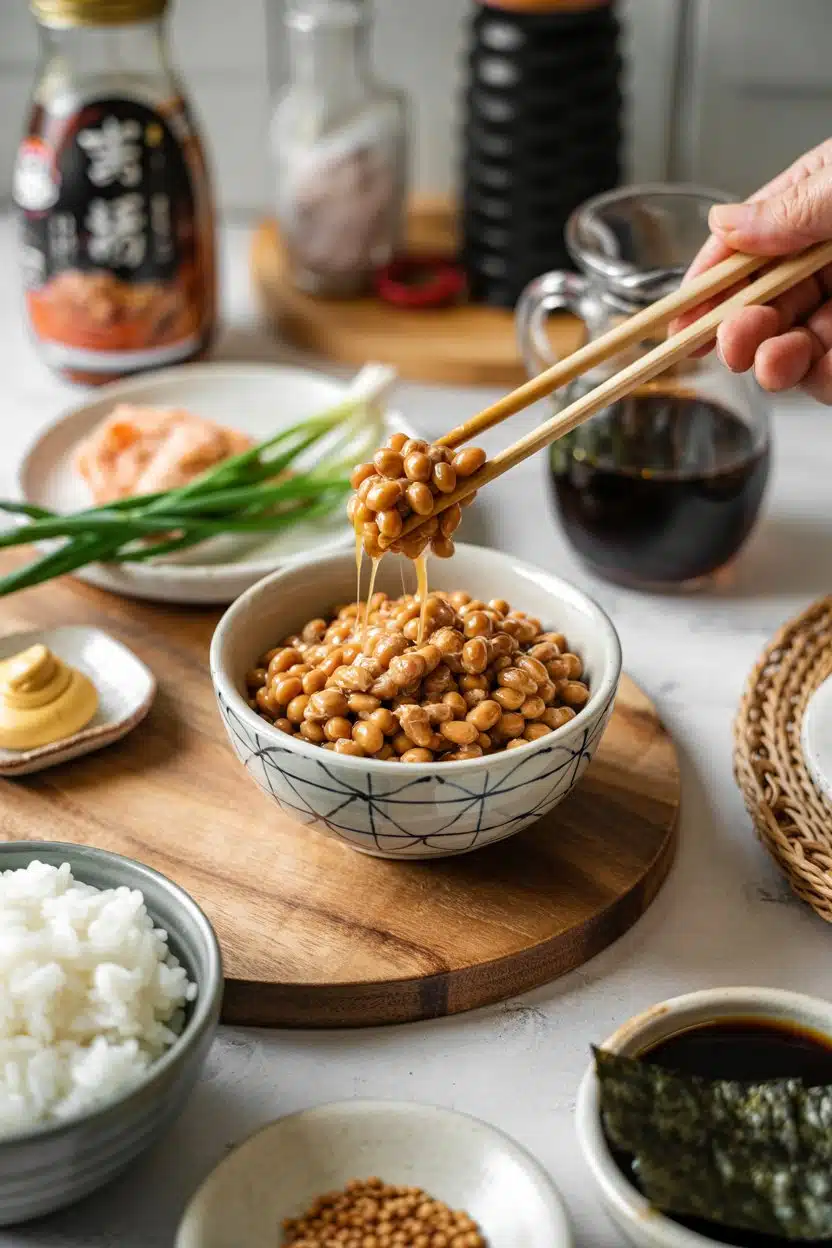
The soybeans themselves are small, pale brown, and soft. Their surface is coated in viscous strands that stretch dramatically when stirred - a texture that surprises first-time eaters.
Two main styles exist: itohiki natto (the common stringy type) and hikiwari natto, made from hulled, crushed soybeans, which has a finer texture and slightly milder character.
Flavor
Texture
Aroma
Pungent
What Does Natto Taste Like?
The closest comparison most people reach for is aged cheese - a funky, almost ammoniated sharpness sitting over a deep savory base.
That's accurate, however natto also carries a bitter edge that cheese doesn't, plus the clean protein sweetness of cooked soybeans underneath everything.
Stirring activates the flavor. More air contact during mixing intensifies both the tang and the aroma, which is why Japanese cooks often stir natto vigorously before serving. Heat mellows the sharpest notes - folded into hot rice or noodles, the ammonia-like top note softens while the umami core remains. Raw egg yolk rounds out the bitterness without masking the fermented character.
Karashi mustard - the sharp yellow variety included in most packaged natto - cuts through the heaviness and brings the flavor into better focus. Without it, the profile can feel one-dimensional.
How to Eat Natto
Natto is served raw or at most gently warmed by contact with hot food. Long cooking destroys the probiotic bacteria and dulls the fermented character.
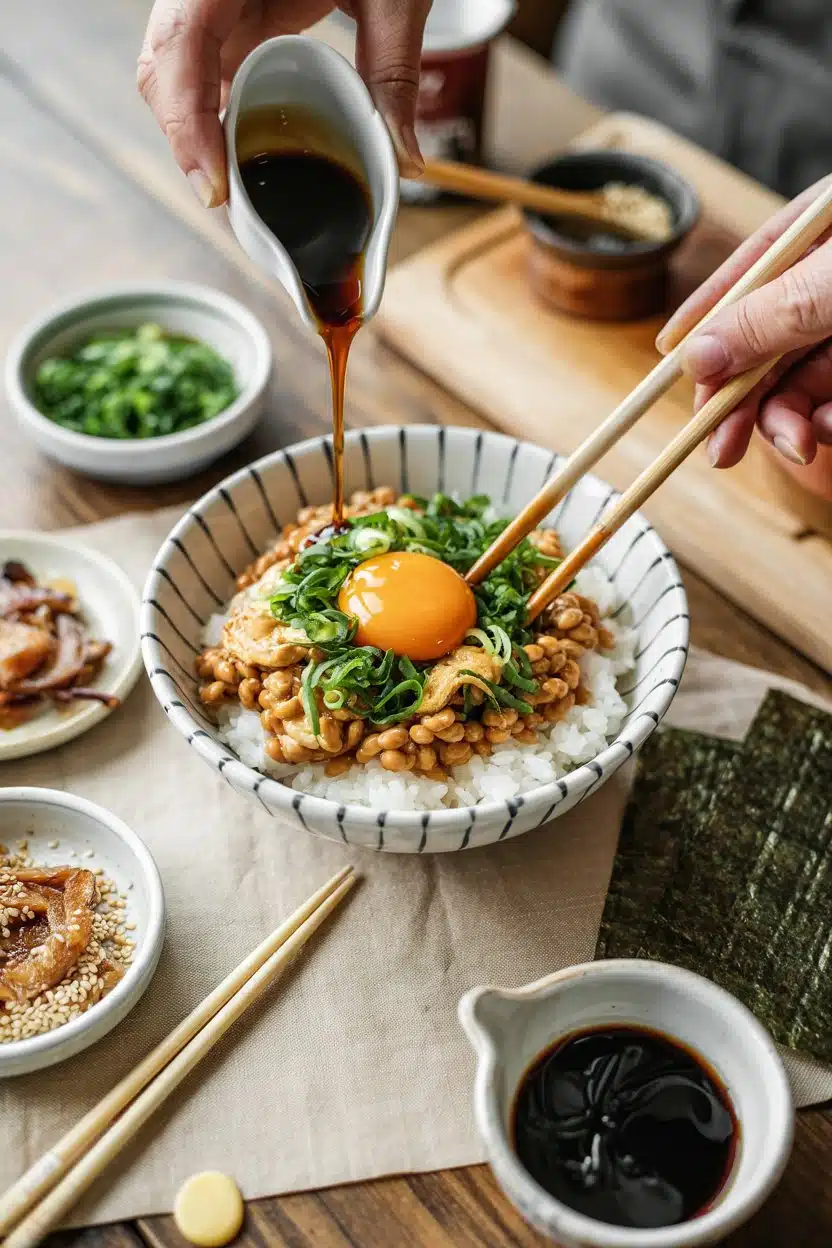
The standard approach is simple: open the tub, add the included soy sauce and karashi mustard packets, stir vigorously, and spoon over hot white rice.
| Method | Best For | Tip |
|---|---|---|
| 🥗 Raw over rice | Traditional breakfast, quick meals | Stir 30-40 times before serving to develop the strands |
| 🍜 Folded into noodles | Soba, udon - added just before eating | Add at the table, not during cooking |
| 🥚 Mixed with egg and scallion | Rice topper, onigiri filling | Raw egg yolk softens the bitter edge |
| 🥞 Blended into savory pancakes | Okonomiyaki-style batters | Use sparingly - 2-3 tablespoon per batter batch |
| 🥄 Stirred into dressings | Miso-based sauces, natto-mayo | Blend smooth if texture is unwanted |
🌏 Modern Fusion
Shiso leaf is a natural pairing - its herbal brightness cuts through natto's funk without competing with the umami. If shiso isn't available, look up alternatives to shiso that carry a similar anise-forward quality. Tamari works better than standard soy sauce for adding depth without excess salt; if you're out, there are solid alternatives to tamari worth knowing. A small amount of kimchi alongside natto rice creates a layered fermented pairing that's worth trying.
karashi mustard
scallions
raw egg yolk
shiso leaf
kimchi
tamari
How to Buy and Store Natto
Look for tubs or vacuum packs with firm, intact seals and no bulging - a swollen package signals over-fermentation or bacterial overgrowth.
The soybeans inside should be small, uniform, and pale brown.
Avoid packs with excessive liquid pooling at the bottom or any visible white fuzzy mold (distinct from the normal sticky protein film coating each bean).
Check the manufacture date; fresher is noticeably better in aroma and texture.
Opened natto keeps for just 24-48 hours in the coldest part of the fridge. Seal it tightly; the aroma transfers to surrounding foods quickly.
Frozen, unopened tubs last up to 3 months. If you're pairing natto with rice regularly, it's worth knowing how long rice keeps so both components stay fresh together.
Start Here If You're New to Natto
Try the simplest entry point first: one tub over hot short-grain rice with the included condiments. Don't skip the mustard. If the texture is the obstacle, hikiwari natto's finer, less stringy consistency is an easier starting point.
Use natto in small amounts inside okonomiyaki batter or mixed into a miso-based dressing before committing to it as a standalone dish - knowing okonomiyaki's shelf life helps you plan ahead if you're batch-cooking.
The flavor rewards patience and repetition.
Frequently Asked Questions
The stickiness comes from poly-glutamic acid, a compound produced by Bacillus subtilis var. natto during fermentation. This polymer forms the web-like strands that stretch between the beans. Stirring natto more vigorously before eating produces longer, more developed strands and intensifies this effect.
Yes - freeze natto in its original unopened tub for up to 3 months. Thaw it overnight in the refrigerator rather than at room temperature. Texture holds reasonably well after freezing, though some slight softening of the beans is normal.
Partially - the fermented funk and ammonia-like notes overlap with aged, washed-rind cheeses. However, natto also has a distinct savory-bitter edge and a legume sweetness that cheese doesn't share. The umami depth is comparable, however the overall profile is its own category.
Serving natto over very hot rice is the most effective method - the steam carries off the sharpest ammonia-like volatiles quickly. Adding karashi mustard and a small amount of soy sauce also masks the most aggressive aroma notes. Keeping opened natto sealed in an airtight container limits aroma transfer to other fridge contents.
Natto is high in complete plant protein, fiber, and vitamin K2 at levels rarely found in other foods - a single 100g serving can contain several times the daily adequate intake of K2. That K2 content is significant for anyone taking warfarin or other anticoagulants, as it can interfere with medication. The probiotic Bacillus subtilis bacteria are only beneficial if natto is eaten raw or minimally heated.