Doenjang hits you before you even taste it - that sharp, barnyard-ferment smell rising from the jar signals something ancient and serious at work.

It's the kind of paste that makes a plain broth taste like it's been simmering for hours, and understanding the role soy sauce plays in Korean cooking helps explain why doenjang occupies a different, deeper register entirely.
If you're already familiar with alternatives to soy sauce, doenjang sits in a related family - fermented, sodium-forward, but far more complex in structure.
Doenjang is a Korean fermented soybean paste with deep umami, earthy bean flavor, and a pungent fermented tang. It anchors soups, stews, and marinades, working as a savory backbone rather than a single-note seasoning. High in sodium, long shelf life, and vegan.
What Is Doenjang?
Doenjang (된장) is a thick, coarse-textured fermented soybean paste that forms the savory backbone of Korean cooking.
Remember it later
Planning to try this recipe soon? Save it for a quick find later!
Made by pressing and drying soybeans into meju blocks, fermenting those blocks in brine, then separating the liquid (which becomes ganjang, or Korean soy sauce) from the solids - the thick, dark paste left behind is doenjang.
The word translates roughly to "thick paste," which describes its physical character well. Commercial varieties tend toward a smoother consistency, while traditionally aged versions keep visible soybean chunks and develop sharper, more complex fermented notes over months or years.
Regional variation runs deep: producers in Korea's Jeolla and Gyeongsang provinces are known for longer-aged, more intensely flavored varieties.
- 🫙 Traditional doenjang - made with handmade meju, aged in clay pots, chunky and pungent
- 🏭 Commercial doenjang - smoother paste, milder flavor, more consistent batch to batch
- 🌿 Cheonggukjang - a shorter-fermented variant, even more pungent, closer to Japanese natto in character
Understanding the role gochujang plays alongside doenjang helps clarify the Korean pantry - both are fermented pastes, but gochujang adds heat and sweetness where doenjang delivers pure savory depth.
What Does Doenjang Taste Like?
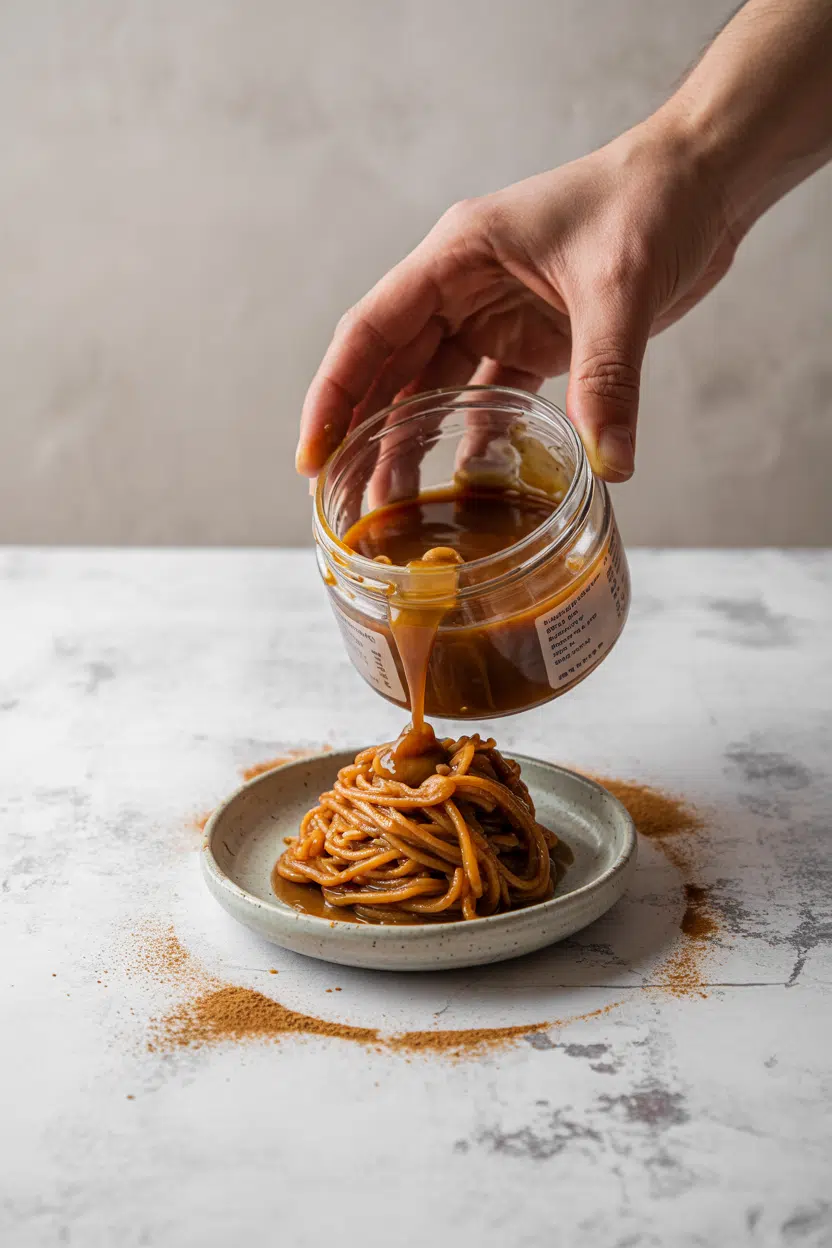
Doenjang leads with a wallop of umami - not clean or subtle, but layered and rooted in fermented soybean protein.
Underneath that is a pronounced earthiness, like damp soil and roasted legumes, followed by a bright acidic tang from fermentation and a firm saltiness throughout.
Compared to miso, doenjang is richer, chunkier, and significantly earthier - miso tends toward cleaner, more delicate sweetness.
Heat mellows doenjang's sharpest fermented edges without stripping the umami, which is why dissolving it into a simmering broth opens up a rounder, more integrated flavor than eating it raw.
How to Use Doenjang
Doenjang's most iconic application is doenjang-jjigae, the Korean soybean paste stew built on a base of the paste dissolved into anchovy or kelp broth, loaded with tofu, zucchini, and mushrooms.
It's a dish where the paste does almost all the seasoning work on its own.
For reference on how well tofu holds up in long-simmered stews, the guide on keeping tofu fresh is useful before you buy in bulk.
Beyond stew, doenjang reaches across many preparations.
| Method | Best For | Tip |
|---|---|---|
| 🥗 Raw | Dipping paste for raw vegetables, ssam wraps | Mix with sesame oil, garlic, and a drop of gochujang to balance the raw pungency |
| 🍲 Dissolved in broth | Soups, jjigae, noodle broths | Whisk through a fine strainer or mash into broth - don't boil hard after adding |
| 🥩 Marinade | Pork belly, beef short ribs, tofu steaks | Marinate overnight; the fermented enzymes help tenderize meat |
| 🔥 Sweated with aromatics | Stir-fry bases, braised vegetables, banchan | Cook with garlic and sesame oil for 1-2 minutes to round out the raw ferment edge |
Pairing doenjang with garlic, scallion, and sesame oil is the classic Korean flavor trio - each one amplifies the paste's savory depth without competing. Pork and beef stand up well to its intensity; delicate white fish generally doesn't.
Large amounts of sugar flatten the fermented tang, so keep sweeteners minimal when doenjang is the featured ingredient.
If you're looking for something to swap in when doenjang isn't available, the guide on replacements for doenjang covers the practical options, including miso-based workarounds.
How to Buy and Store Doenjang
At the store, look for jars with dense, dark brown paste and minimal liquid separation pooling at the top. A faint fermented aroma through the packaging is normal and expected.
Labels reading "aged" (jang) or "handmade meju" signal a traditionally produced product with more complex flavor development.
Avoid jars with an aggressively rotten smell (distinct from fermented tang) or heavy mold on the surface beyond the expected white bloom.
Once opened, refrigerate tightly sealed in the original jar or an airtight container to slow oxidation.
For a full breakdown of how long it lasts under different conditions, see the guide on doenjang's shelf life.
Aged varieties intensify further in the fridge over time - which is either an asset or a liability depending on your tolerance for pungency.
Start With Doenjang-Jjigae
If this is your first jar, go straight to a simple stew.
Dissolve two tablespoons into anchovy broth, add tofu and zucchini, and simmer for fifteen minutes - that single dish shows you what doenjang does at its best.
From there, thin spoonfuls into marinades or dressings to explore its range.
People who cook regularly with alternatives to miso paste often find doenjang is the more grounding, rugged option once they try it side by side.
Frequently Asked Questions
Doenjang is earthier, chunkier, and more pungent than most miso. Miso typically ferments with added koji mold and often contains rice or barley, giving it a cleaner, sometimes slightly sweet flavor. Doenjang ferments from meju - pure soybean blocks - producing a rawer, more barnyard-forward result.
Yes, with caveats. Miso works as a structural substitute in soups and marinades but delivers a milder, less earthy result. Use a darker miso variety like red or hatcho for the closest flavor match, and consider the guide on alternatives to gochujang if your recipe also calls for that paste.
Heat mellows its sharpest edges, producing a deep, savory broth with earthy undertones and no single aggressive note. The fermented tang softens significantly, leaving behind layered umami that tastes slow-cooked even in a quick stew.
The paste itself is vegan - soybeans, salt, and water. However, traditional doenjang-jjigae broth uses dried anchovies or shrimp. Substitute kombu and dried shiitake broth for a fully plant-based version without losing much depth.
Add more unsalted broth or water to dilute the paste, and introduce starchy vegetables like potato or daikon, which absorb salt as they cook. Rinsing the paste itself is not recommended - it strips flavor along with sodium.