Most people treat lettuce as a neutral backdrop - the thing that fills space around the "real" ingredients.
That's a mistake.
Lettuce has its own flavor profile, structural purpose, and variety-specific behavior that directly affects how a dish comes together.
If you've ever wondered why the taste of arugula feels sharper or why what pairs with kale differs so much from what works with iceberg, the answer starts with understanding each green on its own terms.
Lettuce is a mild, crisp leafy green used primarily raw in salads, sandwiches, and wraps. Flavor ranges from clean and watery in iceberg to slightly bitter in romaine and buttery-soft in butterhead. It's low in calories, high in water content, and best eaten fresh.
What Is Lettuce?
Lettuce (Lactuca sativa) is a fast-growing leafy vegetable native to the Mediterranean and Near East, cultivated for thousands of years across Egypt, Greece, and Rome.
Remember it later
Planning to try this recipe soon? Save it for a quick find later!
It belongs to the daisy family and grows either as a loose-leaf cluster or a compact, layered head.
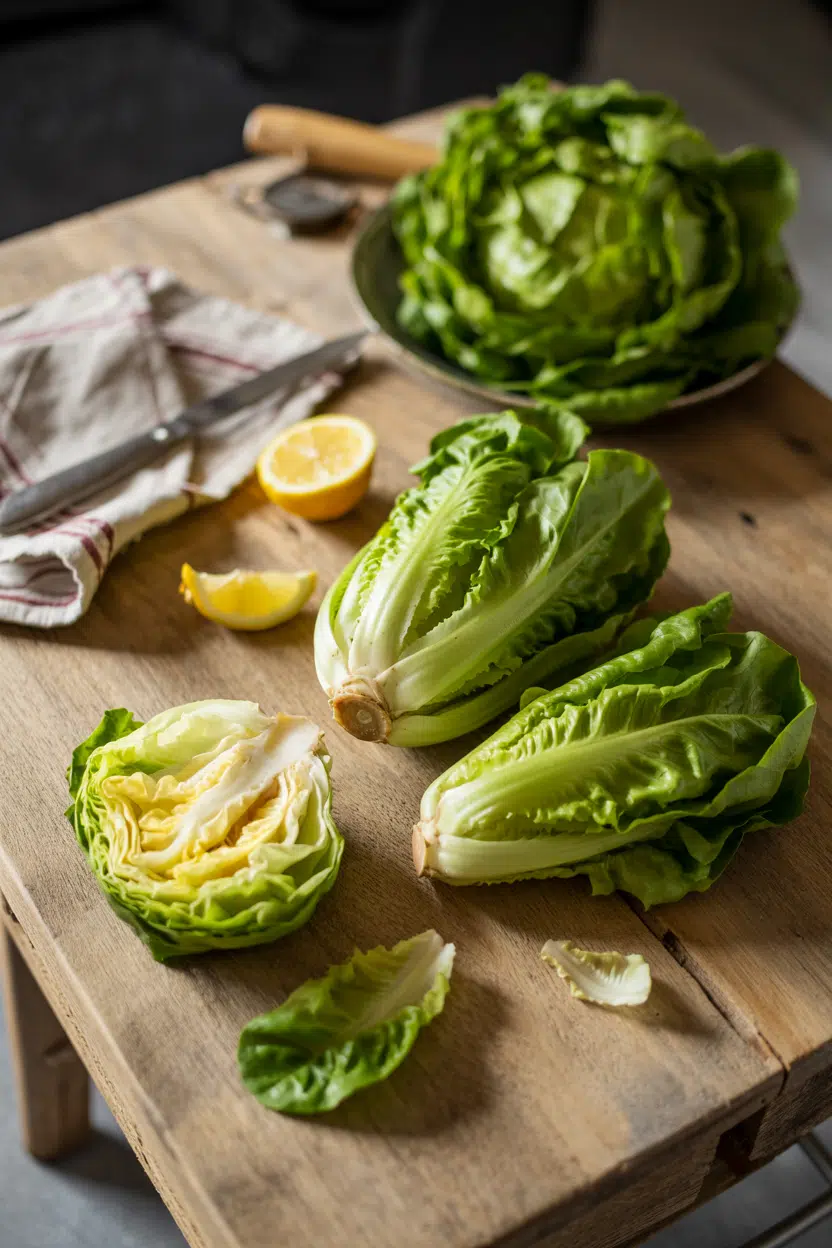
The four main types behave differently in the kitchen. Iceberg forms a tight, pale head with a high water content and firm crunch.
Romaine grows in elongated heads with thicker ribs and a slightly more assertive flavor.
Butterhead (Boston or Bibb) has soft, cupped leaves with a tender texture.
Loose-leaf varieties - red leaf, green leaf - spread outward without forming a head, offering ruffled, fragile leaves.
All types share the botanical name Lactuca sativa, and you'll sometimes see romaine labeled cos lettuce, especially in British and Australian markets.
If a recipe calls for "salad greens," any of these types can work, though the texture and flavor shift considerably between them.
For moments when none are available, a guide to alternatives to lettuce covers the closest options across different use cases.
What Does Lettuce Taste Like?
Lettuce is mild by design. The dominant impression is clean, slightly sweet, and watery - closer to cucumber in wateriness than to anything sharp or green-forward.
Romaine leans slightly bitter along its ribs, which firms up that profile without becoming unpleasant. Butterhead reads almost neutral, with a soft richness that makes it feel more substantial than its thin leaves suggest.
Heat changes everything. Raw lettuce has a mild grassiness that's barely there.
Apply direct heat - say, grilling romaine hearts - and that green note cooks off, leaving a faint sweetness and char that feels nothing like salad. Quick wilting in a hot pan softens the texture and mutes any bitterness without turning the leaves to mush.
How to Use Lettuce
Lettuce does the most work raw, where its crunch and water content provide contrast against heavier ingredients.
In a well-built sandwich or burger, a thick romaine or iceberg leaf separates moist fillings from the bread and keeps everything from going soggy.
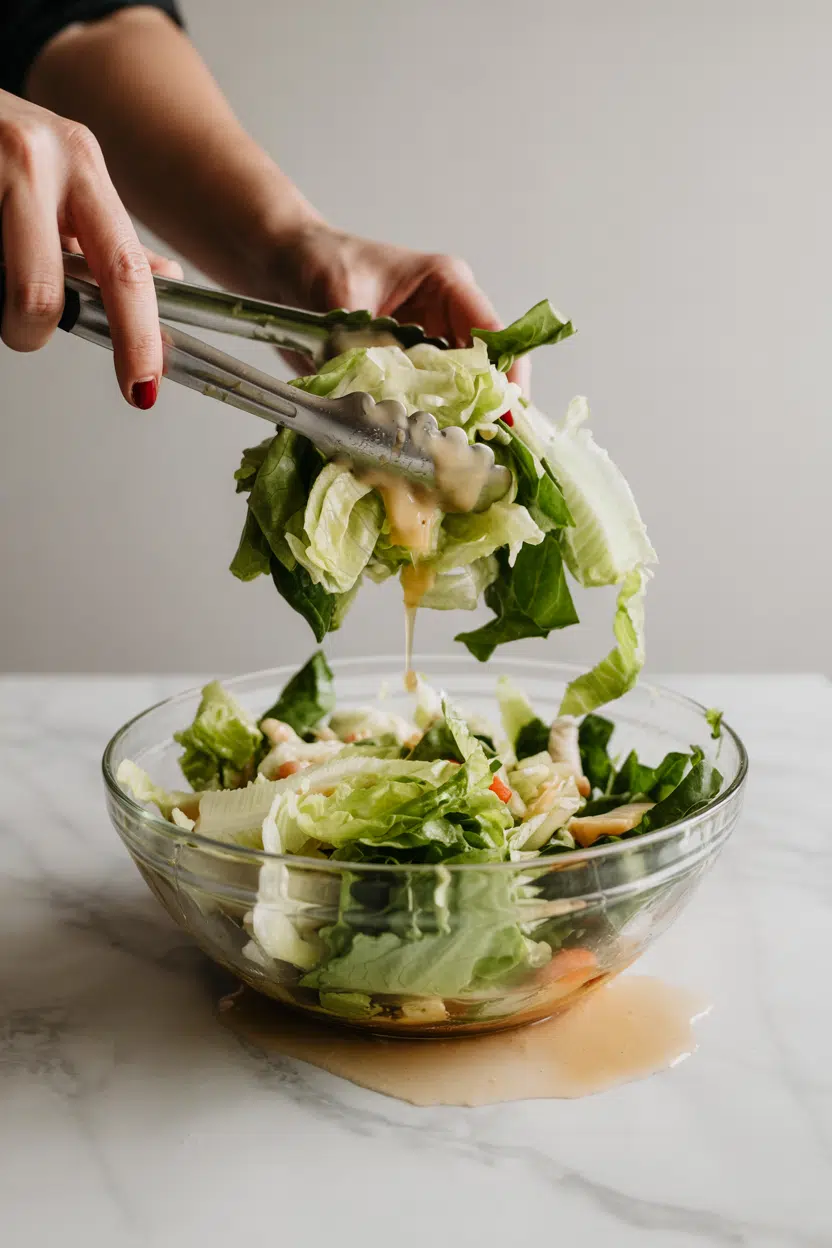
In a tossed salad, lighter leaf varieties catch dressing without becoming saturated - especially important when you're working with a making balsamic vinaigrette dressing (homemade) at home.
Whole leaves work as edible containers. Korean ssam uses large romaine or leaf lettuce to wrap grilled meat, rice, and fermented paste.
Vietnamese banh mi lines the bread with lettuce for fresh contrast against the pickled daikon and rich protein. Both applications treat the leaf as structure, not garnish.
| Method | Best For | Tip |
|---|---|---|
| 🥗 Raw (salads) | Mixed green salads, grain bowls, chopped salads | Dress just before serving - lettuce wilts fast once coated |
| 🥙 Raw (wraps) | Lettuce cups, ssam, taco shells, rice paper rolls | Butterhead cups hold fillings best; romaine ribs add crunch |
| 🔥 Grilled | Romaine hearts as a warm side or salad base | Halve lengthwise, brush with oil, grill 2-3 minutes per side |
| ♨️ Wilted | Warm salads, quick sautés, hot-plate garnish | Add at the last second - 30 seconds of heat is enough |
Pairing works best when you match dressing weight to lettuce type.
Iceberg handles creamy, heavy dressings like ranch or blue cheese without collapsing.
Delicate leaf lettuces need lighter vinaigrettes.
Romaine sits in the middle - it holds oil-based dressings well but won't handle a thick sauce.
Feta, shaved Parmesan, avocado, bacon, grilled chicken, and shrimp all pair cleanly against lettuce's mild base.
Skip heavy cream sauces and avoid any method involving prolonged liquid contact. Lettuce braised or simmered for more than a couple of minutes disintegrates into a slippery, unpleasant texture with zero structural value.
How to Buy and Store Lettuce
Firm core, crisp leaves, no brown edges - that's the buying standard. For whole heads, squeeze gently; it should feel dense and spring back. Loose-leaf bunches should stand upright, not slump. For prewashed bags, check the sell-by date and look inside the bag for pooled moisture, which accelerates decay.
Storage is straightforward but matters. Keep lettuce unwashed - moisture on the leaves triggers rot faster than anything else.
Wrap in a slightly damp paper towel and store in a perforated plastic bag or an open bag in the crisper drawer. Knowing the early lettuce spoilage signs saves you from discovering a slippery mess at the back of the fridge.
- 🥬 Iceberg and romaine - last up to 10 days stored correctly
- 🌿 Butterhead and loose-leaf - best within 5-7 days; more fragile
- 📦 Prewashed bags - use within 2-3 days of opening regardless of sell-by date
Where to Start With Lettuce
Start with romaine if you're new to cooking with lettuce intentionally. It tolerates dressings without wilting immediately, holds its shape under heat, and its mild bitterness adds just enough contrast to keep a dish from tasting flat.
From there, butterhead is worth trying for wraps - its cupped leaves are more functional than any loose-leaf type for holding fillings.
If you want something with more bite alongside your greens, swapping out endive covers the bitter end of the leafy green spectrum.
For dishes where you want a green with more iron and structure, swapping out spinach lays out which options hold up best under different conditions.
Lettuce rewards deliberate variety choice. Pick the right type for the job and it stops being a filler ingredient.
Frequently Asked Questions
Bitterness increases when lettuce bolts - meaning it begins to flower due to heat or stress. Romaine and leaf lettuces bitter faster than iceberg. Removing the thick inner ribs of romaine reduces most of the sharp edge.
Romaine has elongated leaves, thicker ribs, and a slightly bitter flavor that holds up under dressings and light heat. Iceberg forms a dense, pale head with a milder flavor and higher water content, better suited to cold, crunchy applications.
Yes - raw is the standard preparation. Lettuce is almost always eaten uncooked; its crunch and freshness are its main contribution to a dish. Washing thoroughly before eating is important, as leaves can carry soil or surface bacteria.
It's low in calories and provides vitamin K, vitamin A, and folate. Fat-soluble vitamins absorb better when paired with a small amount of oil - a basic vinaigrette actually makes the nutrients more available.
Not for raw use. Freezing ruptures the cell walls and produces a limp, watery leaf that won't work in salads or wraps. Frozen lettuce is only usable blended into smoothies or cooked down into soups.