Lardo arrives at the table in translucent ribbons - pale, almost luminous, draped over warm bread where the fat begins to soften the moment it lands.

Unlike what makes guanciale distinct as a cured jowl, or the leaner, more familiar character of pancetta's flavor and uses, lardo is pure fatback: nothing but the back fat of the pig, cured and aged until it becomes something genuinely refined.
Lardo is cured pork fatback aged with salt, rosemary, and garlic until silky and firm. It's served paper-thin over warm bread, shaved onto hot pasta, or used as a basting layer around lean roasting meats. Rich, buttery, and herb-scented - a little goes a long way.
What Is lardo?
Lardo is cured pork fatback - the thick layer of fat running along the pig's back - salted and packed with herbs, then left to age.
Remember it later
Planning to try this recipe soon? Save it for a quick find later!
The most celebrated version is Lardo di Colonnata, made in the marble quarry town of Colonnata in Tuscany, where slabs are cured in carved marble basins with sea salt, rosemary, garlic, and black pepper.
Understanding comparing rock salt vs sea salt options matters here, since the mineral quality of the curing salt directly shapes the final flavor.
A second protected regional type, Lardo di Arnad, comes from the Aosta Valley in the Italian Alps and uses a slightly different herb blend that includes bay leaf and clove. Both are regulated under Italian geographic indication laws.
Elsewhere in Italy, producers make undesignated cured fatback under the broad name lardo, aged anywhere from a few weeks to several months.
Unlike cured meats with significant muscle fiber - think prosciutto or salami - lardo has essentially no lean tissue. It is pure fat, deliberately aged, not a by-product or trim.
That distinction makes it a different category of cured product entirely.
What Does lardo Taste Like?
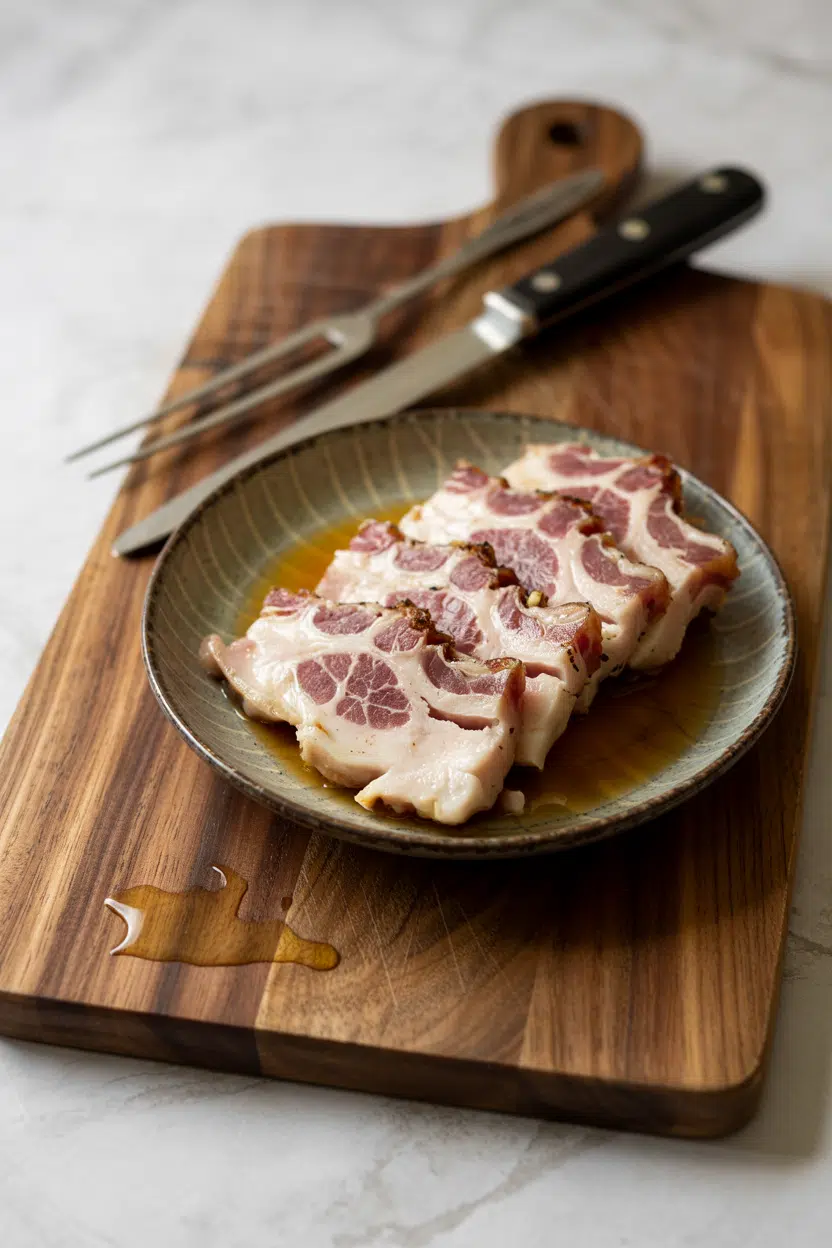
Lardo's flavor is quieter than most cured meats, which surprises people expecting something aggressively porky. The dominant note is clean, sweet fat - not grease, but something closer to very good cultured butter with a saline edge.
Rosemary and garlic from the cure come through as a background note, never sharp or raw.
Heat changes things: a slice laid on warm toast softens into the bread and the herb character opens up, releasing that piney aroma.
It tastes similar to the role prosciutto plays as a cured fat accent, however lardo is purer - no lean meat to interrupt the texture, no caramel notes from the aging of muscle.
How to Use lardo
Lardo's role in cooking falls into two distinct modes: served raw and paper-thin, or melted as a cooking medium. Raw service is the more classical approach - ribbons draped over a warm surface so the fat softens without fully rendering.
| Method | Best For | Tip |
|---|---|---|
| 🥗 Raw / Sliced | Crostini, warm bread, cheese boards with pecorino and pickles | Slice paper-thin; the thinner the cut, the faster it softens |
| 🍳 Melted Over Heat | Hot pasta, gnocchi, roasted vegetables | Lay slices directly on the hot dish; don't use a pan |
| 🍖 Wrapped / Barded | Chicken breast, pork loin, lean roasts | Secure with kitchen twine; the fat bastes as it renders |
| 🥘 Rendered / Diced | Bean braises, sauté bases, slow-cooked greens | Keep heat low; high heat turns the fat acrid and loses the herb character |
On a cheese board, lardo earns its place alongside aged pecorino, pickled gherkins, and black pepper - the fat's sweetness cuts through the cheese's sharpness.
Pair it with a glass of amaro or a medium-bodied red and the combination makes sense immediately.
When swapping out lardo isn't possible, the dish simply won't have the same uniform fat coating - substitutes work but change the character.
Avoid pairing lardo with delicate fish. The fat overwhelms mild white fish entirely and the herb notes clash.
High-acid fresh fruit has the same problem - the fatty texture and sharp acidity fight without resolving.
How to Buy and Store lardo
At a good Italian deli or specialty butcher, look for a firm, uniformly white slab with a faint ivory tint and visible seasoning layers pressed into the surface.
Yellowing fat, tacky texture, or a sour smell are signs the piece has oxidized or been stored poorly.
Regional labels like Lardo di Colonnata IGP signal controlled production and consistent quality - worth seeking out if available.
Buy a whole piece and slice at home, or ask the vendor to cut it paper-thin to order.
Store it vacuum-sealed or wrapped tightly in parchment then plastic, in the coldest part of the fridge.
Opened pieces hold well for 2-3 weeks; for a detailed breakdown of timing by packaging type, see lardo's shelf life.
If your cure recipe calls for specific aromatics and rosemary isn't available, alternatives to rosemary can fill the piney, herbal role in a pinch.
Start Here With Lardo
If you've never used lardo before, begin with warm bread and a sharp cheese. Lay a paper-thin slice on a crostini straight from the oven, wait thirty seconds, and eat it immediately.
That single experience tells you everything about how lardo works: the fat softens, the herbs open up, and the salt and richness resolve cleanly.
From there, wrapping a lean chicken breast before roasting is the logical next step - the fat bastes from the outside in and the result is noticeably more moist than the same cut cooked without it.
Use it sparingly; a few slices carry a lot of flavor and fat, and the goal is accent, not saturation.
Frequently Asked Questions
No. Pancetta is cured pork belly, which contains both fat and lean muscle. Lardo is pure back fat with no muscle tissue - the texture, use, and flavor are different categories of cured pork product.
It's a geographically protected lardo from Colonnata, Tuscany, cured in carved marble basins with sea salt, rosemary, garlic, and black pepper. The marble's mineral properties and cool quarry temperatures are part of what defines the cure.
Yes - it works as a barding fat around lean roasts, melted over hot pasta, or slowly rendered as a sauté base. Keep heat low when rendering; high heat destroys the herb character.
Paper-thin slices on warm crostini is the classic approach. It also works shaved over hot gnocchi, layered on a cheese board with pickles and pecorino, or wrapped around chicken before roasting.
An unopened vacuum pack keeps for several months refrigerated. Once opened and well-wrapped in parchment and plastic, plan to use it within 2-3 weeks for best quality.