Bay leaf does something no other herb does quite the same way: it works invisibly.
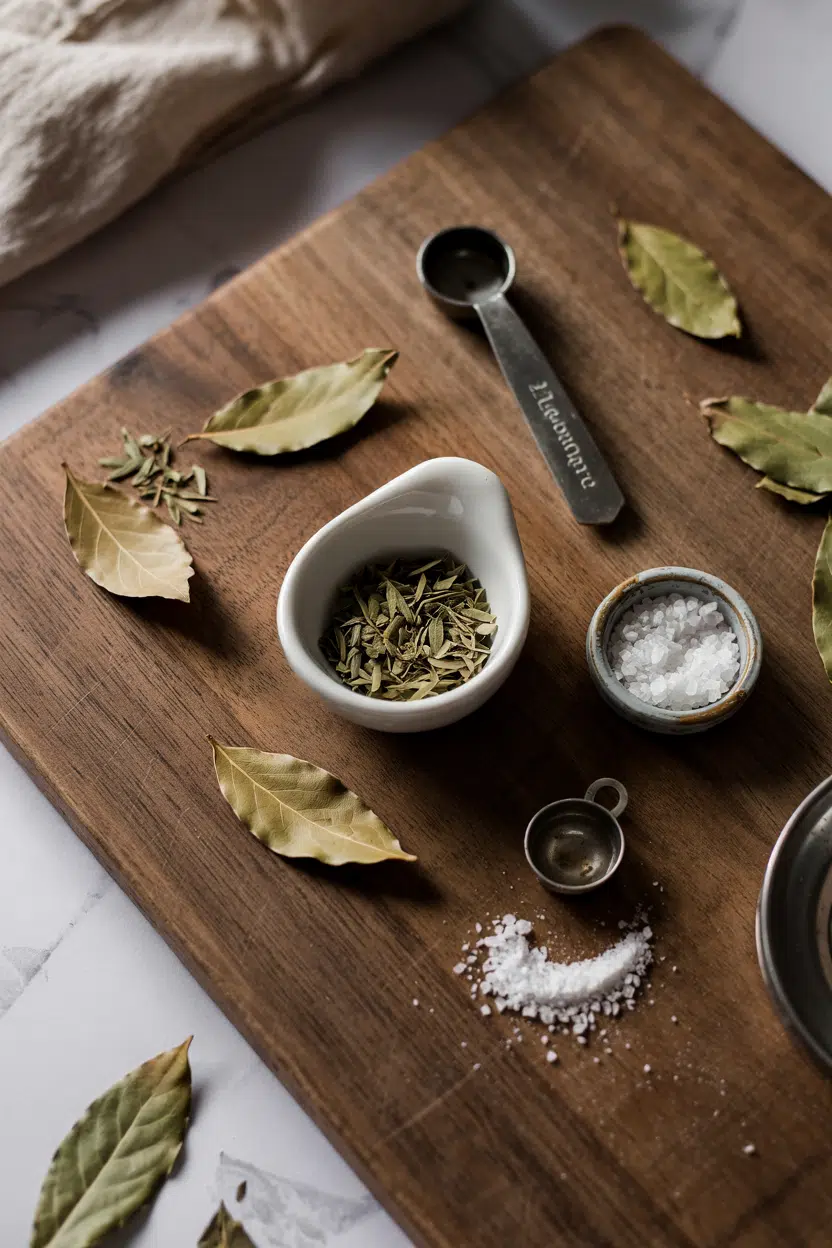
You drop a whole dried leaf into simmering stock or a slow braise, and it never announces itself - it just makes everything taste more complete.
Understanding fish stock stand-ins gets easier once you understand why the base liquid matters, and bay leaf is a large part of that.
This leaf from the laurel tree (Laurus nobilis) has been used across Mediterranean kitchens for centuries, and its quiet contribution is harder to notice than it is to miss.
A dried aromatic leaf from the laurel tree, bay leaf adds a resinous, camphor-tinged background note to long-simmered dishes. Always added whole and removed before serving. Moderate in intensity, broad in application across stocks, braises, beans, and pickling brines.
What Is bay leaf?
Bay leaf comes from Laurus nobilis, a tree native to the Mediterranean basin that has been cultivated and traded since antiquity.
Remember it later
Planning to try this recipe soon? Save it for a quick find later!
It belongs to the Lauraceae family and is also called bay laurel, sweet bay, or hoja de laurel in Spanish-speaking kitchens.
The leaves are oval and pointed, leathery in texture when fresh, and dry to a stiff, papery structure. Fresh leaves are deep green and glossy; dried ones shift to olive or muted green.
Two main forms appear in cooking:
- 🌿 Dried bay laurel (Laurus nobilis) - the standard Western variety, sold whole or ground, used in European and Latin American cooking
- 🌱 Indian bay leaf (tejpat) - from a different species (*Cinnamomum tamala*), with three distinct veins and a flavor closer to cinnamon and clove; used heavily in South Asian biryanis and curries
Unless a recipe specifies tejpat, the ingredient in question is almost always Laurus nobilis. The two are not direct substitutes - their flavor profiles differ significantly despite sharing the same common name in some markets.
What Does bay leaf Taste Like?
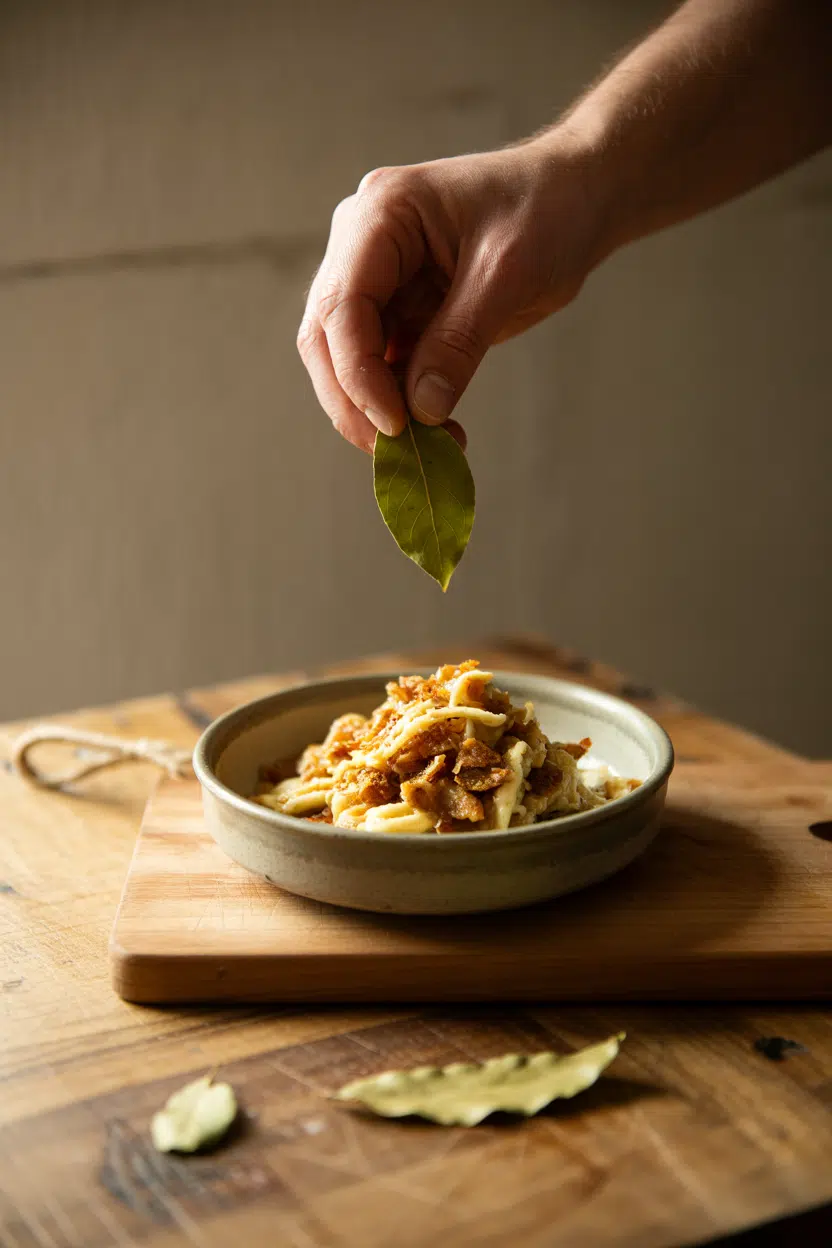
Raw bay leaf tastes almost medicinal - sharp, slightly bitter, with a resinous edge that's more warning than welcome. That changes entirely once heat and time enter the equation.
Simmered in liquid for 45 minutes or more, the leaf releases eucalyptol and cineole - the essential oils responsible for its menthol-adjacent quality - into the broth.
The result is an aromatic undertone that reads as "depth" rather than any identifiable flavor.
Think of it as a restrained cross between oregano and eucalyptus, with a bay-specific resinous note that neither herb produces alone.
Fresh leaves are more pungent and slightly more bitter than dried; dried ones develop a softer, more rounded quality over time.
How to Use bay leaf
Bay leaf earns its place in slow-cooked, liquid-heavy preparations where it has time to release its oils. It doesn't work as a finishing herb or a garnish - heat and time are non-negotiable.
| Method | Best For | Tip |
|---|---|---|
| 🍲 Long simmer | Stocks, braises, bean pots, tomato sauce | Add at the start; remove before serving or straining |
| 🌿 Bouquet garni | French stews, court-bouillon, pot-au-feu | Tie with thyme and parsley stems; easy to pull out as one bundle |
| 🫙 Pickling brine | Savory preserves, pickled vegetables, canning jars | One or two leaves per jar; pairs well with black peppercorns and garlic |
| 🧈 Oil/butter infusion | Sautéed aromatics, rice pilaf, risotto base | Steep leaf in warm fat for 2-3 minutes before adding vegetables |
| 🔥 Lightly crushed | Spice rubs, marinades, adobo | Crack the leaf to expose more surface area and amplify release |
In Mediterranean cooking - particularly Italian and Greek - bay leaf appears in nearly every slow sauce and braise.
French cuisine formalized its role through the bouquet garni, where it works alongside thyme and rosemary (if your rosemary runs out, replacements for rosemary that hold up in a braise are worth knowing).
Latin American kitchens use it in adobos and long-cooked stews, while Indian cooks favor tejpat for biryani and dal.
Pairing-wise, bay leaf integrates best with tomatoes, beef, lamb, beans, lentils, garlic, and onion.
A tomato sauce simmered with one or two bay leaves for an hour develops a backbone that would otherwise require more acidity or salt - though if you're adjusting the sauce itself, tomato sauce swaps that work cover how different bases behave under long cooking.
How to Buy and Store bay leaf
At the store, look for whole dried leaves that are olive-green to dark green, intact, and uncrumbled. Gray-brown, dusty, or heavily broken leaves have already lost most of their essential oils - they'll add very little to your pot.
Fresh bay leaves are worth buying if available - they're more pungent and work well in shorter cooks. Store them wrapped in a damp paper towel inside a sealed bag in the fridge; they'll hold for one to two weeks.
For dried leaves, an airtight, opaque container away from heat and direct light is the standard approach.
A full breakdown of how long bay leaf keeps under different storage conditions covers the specifics, but the short answer is: dried whole leaves at 6-12 months, ground bay at 2-3 months, fresh at 1-2 weeks.
Start With the Stock
Bay leaf is one of those ingredients best understood through a simple test: make a pot of chicken stock twice - once with bay leaf, once without.
The difference won't be obvious, however removing it from your regular rotation will be.
If you're new to using it, start with one leaf in a bean soup or tomato sauce and go from there.
Anyone branching out from standard bay laurel should understand what replacements for bay leaf actually replicate - because none of them do it exactly.
Frequently Asked Questions
Not in the practical sense. Bay leaves are safe to ingest but their fibrous, leathery structure doesn't break down during cooking. The stiff, sharp edges can irritate the throat or digestive tract, so always remove them before serving.
At least 30-45 minutes for noticeable flavor release. One to two hours is better for stocks and braises. Adding bay leaf in the final 10 minutes contributes almost nothing.
Yes, with adjustment. Fresh leaves are more pungent and slightly more bitter, so use one fresh leaf where a recipe calls for two dried. The flavor is sharper but the same aromatic compounds are at work.
They're different species entirely. Indian bay leaf (tejpat) comes from Cinnamomum tamala and tastes closer to cinnamon and clove. Bay laurel (Laurus nobilis) is resinous and eucalyptus-like - the two are not interchangeable.
Very little. The essential oils in bay leaf require sustained heat to release fully. In cooks under 20 minutes, the leaf doesn't contribute enough to justify adding it.