Pulled seitan in smoky barbecue sauce, piled onto a toasted roll, looks convincingly like the real thing - and for good reason. This dense, chewy wheat protein has been feeding people across East Asia for centuries, long before plant-based eating became a mainstream conversation.
Unlike jackfruit or tempeh replacements, seitan delivers a genuinely meat-like bite that holds up to high heat, bold sauces, and aggressive seasoning. Here's exactly what it is, how it tastes, and how to cook it well.
Seitan is a high-protein wheat gluten product with a dense, chewy texture and mild savory flavor. It absorbs broths and sauces readily, making it one of the most convincing meat substitutes available. Best stored refrigerated in liquid and used within a week of opening.
What Is Seitan?
Seitan is a wheat gluten protein product made by washing the starch out of wheat flour dough until only the elastic gluten network remains. The result - a dense, springy mass - is then simmered or steamed in seasoned broth to develop both texture and flavor.
Remember it later
Planning to try this recipe soon? Save it for a quick find later!
Using vital wheat gluten (pre-extracted gluten flour) speeds up the process considerably, which is why most commercial producers and home cooks favor it.
The name comes from Japanese, coined in the 1960s by the macrobiotic food movement, though the product itself is far older. China has produced a similar ingredient called fu for well over a thousand years, using it in Buddhist temple cooking as a meat-free protein source.
Across East Asia, it appears in braised dishes, soups, and cold appetizers under various names including wheat gluten and mock meat.
Seitan comes in a few forms worth knowing:
- Block or loaf - the most common commercial format; dense and easy to slice or cube
- Pre-seasoned strips - vacuum-sealed, ready to pan-fry or heat and serve
- Homemade - made from vital wheat gluten flour, typically shaped and poached in broth
- Fu (Japanese style) - dried or toasted, with a lighter, more porous texture than standard seitan
What Does Seitan Taste Like?
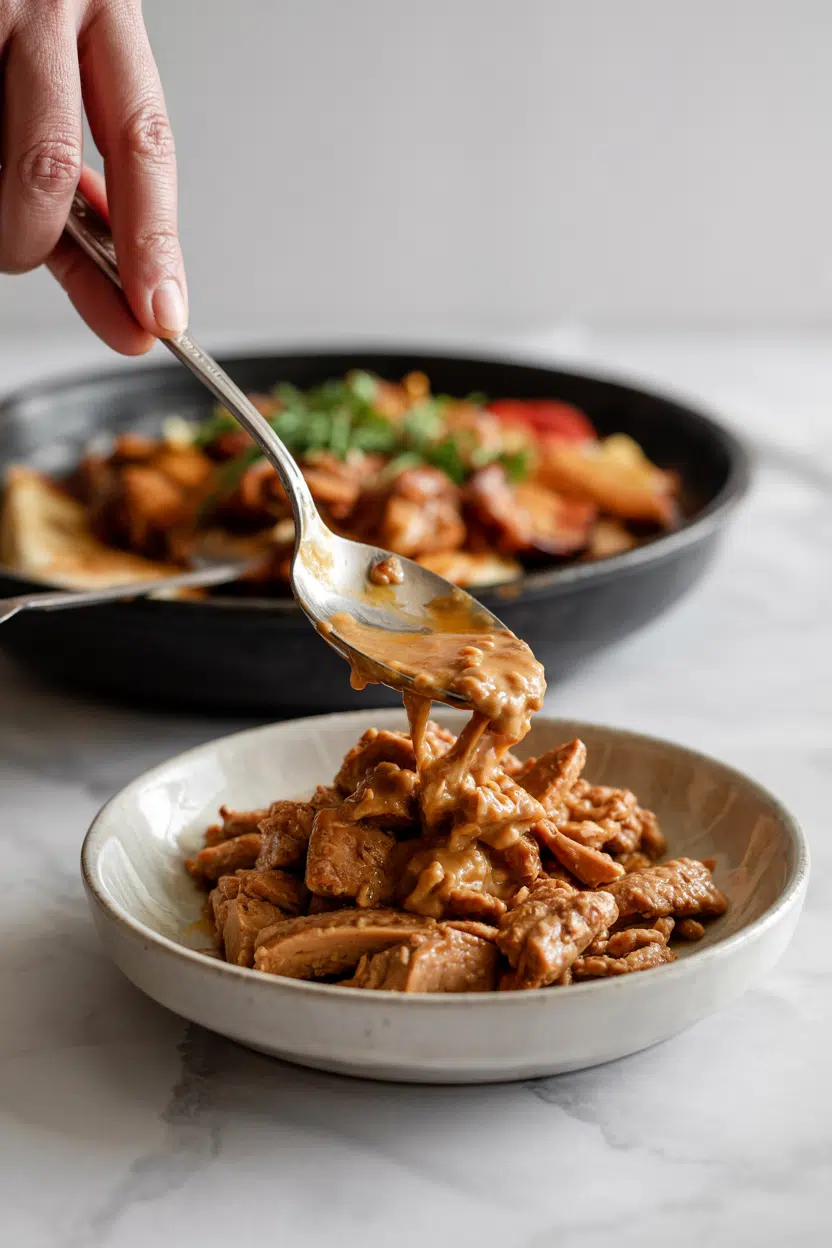
On its own, seitan is mildly savory with a faint bready background - not quite neutral like plain tofu, but close. The more useful way to think about its flavor is what it does under heat and seasoning: it absorbs aggressively.
Simmer it in a rich soy sauce and ginger broth and it takes on that flavor completely.
Compared to firm tofu, seitan has a noticeably meatier chew - less silken, more fibrous. Seasoned and seared, thin slices can read as cooked chicken or pork in both bite and aroma.
The texture is where it earns its reputation, not the raw flavor.
How to Use Seitan
Seitan's dense structure makes it suitable for almost every cooking method you'd apply to meat. It browns well in a hot pan, holds its shape on a grill, and shreds cleanly after braising.
The key is committing to bold seasoning at every stage.
| Method | Best For | Tip |
|---|---|---|
| 🍳 Pan-Frying | Cutlets, sandwich slices, gyro strips | Pat dry before searing - moisture kills the crust |
| 🥘 Braising | Pulled "pork," mock duck, roasts | Low and slow in rich broth or barbecue sauce deepens flavor |
| 🥢 Stir-Frying | Cubed seitan with vegetables, soy-based sauces | Cut small - larger pieces stay rubbery in high-heat stir-fries |
| 🔥 Baking/Roasting | Seitan roasts, vegan schnitzel, katsu | Marinate first; baking without liquid dries it fast |
| ♨️ Steaming | Setting texture in homemade seitan, dumplings | Wrap tightly in foil or cheesecloth to control shape |
Seitan fits naturally into East Asian cooking - Chinese braised wheat gluten dishes, Japanese fu in dashi broth - and crosses into Western formats with ease. Ground or minced seitan folds into vegan meatballs or sausages the same way ground meat would.
It also works sliced thin over cold salads after marinating in sesame oil and rice vinegar. For a similar protein with a different texture profile, seitan alternatives like tempeh or textured soy protein are worth comparing.
It pairs best with soy sauce, miso, smoked paprika, garlic, ginger, and sesame oil. Nut-based sauces - peanut, tahini - cling well to its surface.
Avoid light, watery dressings; they simply don't give seitan enough to work with.
How to Buy and Store Seitan
Good seitan should feel firm and elastic, not slimy. Look for pale tan blocks or strips in vacuum-sealed packs or refrigerated tubs.
Avoid anything with a sour smell, visible discoloration, or a wet, slippery surface - those are signs of spoilage regardless of the date on the pack.
For full details on how long it keeps under different conditions, the seitan storage life guide covers opened, unopened, and frozen storage in depth.
Seitan also freezes reliably for up to three months - freeze it in the chicken broth or vegetable broth you cooked it in for best results after thawing.
- Unopened, refrigerated - 2-3 weeks depending on the brand's packaging
- Opened, stored in liquid - 4-7 days; change the liquid every few days
- Frozen - up to 3 months; texture may soften slightly after thawing
Start Here If You're New to Seitan
If you've never cooked it before, pan-fried cutlets are the lowest-risk entry point. Slice the block thin, press it dry with a paper towel, season heavily, and sear in a hot oiled pan until the edges brown.
From there, braising opens up - pulled seitan in smoky sauce, slow-cooked mock duck, seitan roasts seasoned like a Sunday joint. Those dishes reward patience and bold broth.
Seitan also works as a direct protein swap anywhere you'd reach for tofu alternatives or similar plant proteins, though its chew is distinctly more assertive.
Frequently Asked Questions
No - seitan is made entirely from wheat gluten with no animal products. Its dense, chewy texture mimics meat closely enough that it's used as a direct substitute in dishes like mock duck and pulled "pork."
No. Seitan is pure wheat gluten - it's completely off-limits for anyone with celiac disease or gluten sensitivity. There's no gluten-free version; the gluten is the product.
Traditional seitan is made by kneading wheat flour dough and rinsing it repeatedly until the starch washes away, leaving only the gluten. Most home cooks now use vital wheat gluten flour mixed directly with water and seasoning, which skips the rinsing entirely.
Overcooking seitan at high heat without moisture causes rubberiness. Braise it low and slow in seasoned liquid, or press it dry and sear quickly over high heat - the middle ground (long dry heat) is where it goes wrong.
Not on its own. Seitan is low in lysine, an essential amino acid, so it doesn't qualify as a complete protein. Pairing it with legumes - lentils, edamame, beans - rounds out the amino acid profile at the same meal.