You spot it at the market and stop - this enormous, knobby green thing the size of a watermelon, sometimes bigger, hanging near the tropical produce. Jackfruit is the largest tree-borne fruit in the world, and it has two completely different personalities depending on when you catch it. Unripe, it's a fibrous, neutral-flavored ingredient that shreds like pulled meat.

Ripe, it turns sweet and custardy, tasting somewhere between banana, mango, and pineapple. Both versions are worth knowing.
Jackfruit is a large tropical fruit from South and Southeast Asia. Unripe, it's a neutral, fibrous meat substitute that absorbs seasonings well. Ripe pods taste mildly sweet with tropical fruit notes. Used in curries, BBQ-style dishes, tacos, and desserts across multiple cuisines.
What Is Jackfruit?
Jackfruit (Artocarpus heterophyllus) grows on the jack tree, native to South and Southeast Asia, and has been cultivated in India, Sri Lanka, Bangladesh, and the Philippines for centuries.
Remember it later
Planning to try this recipe soon? Save it for a quick find later!
It's a syncarp - a single fruit formed from hundreds of fused flowers - which explains both its extraordinary size and its clustered interior pods.
A whole fruit can weigh anywhere from 10 to 100 pounds. Inside the thick, spiky green shell, you find fleshy yellow pods (the edible arils), a fibrous core, and large seeds.
Each part is usable.
Regional names vary widely: kathal in Hindi, nangka in Indonesian and Malay, and simply "jack tree fruit" in older English texts. Two main forms reach most kitchens:
- 🟢 Young (unripe) jackfruit - pale, firm pods with almost no sweetness; used as a savory ingredient or meat substitute
- 🟡 Ripe jackfruit - soft, golden pods with a pronounced sweet, tropical aroma; eaten raw or blended
Canned jackfruit, almost always young and packed in brine or water, has made the ingredient far more accessible in Western markets.
What Does Jackfruit Taste Like?
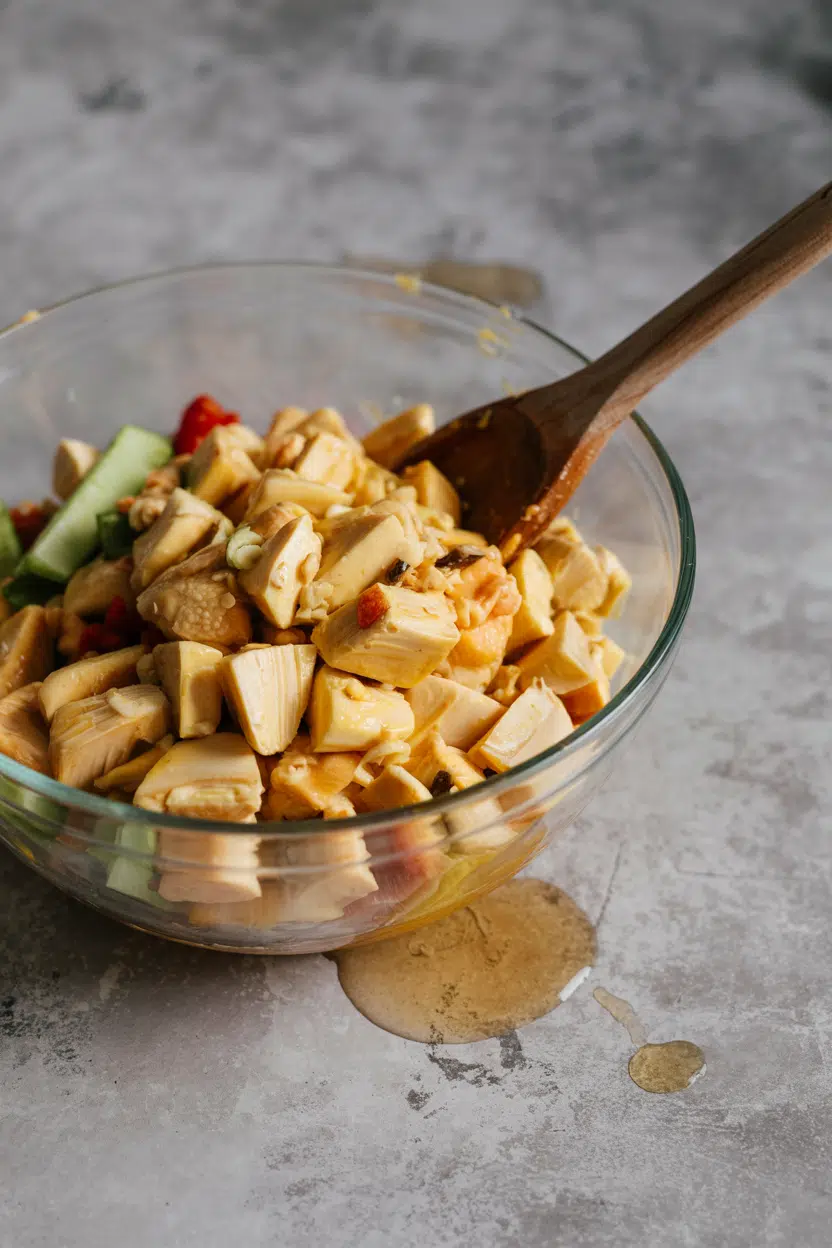
Unripe jackfruit is one of the more unusual ingredients in a produce section because it tastes like almost nothing on its own - mildly vegetal, faintly starchy, with a texture that becomes stringy and fibrous after cooking. That neutrality is the point.
It absorbs marinades, sauces, and spices the way a sponge absorbs water.
Ripe pods are a different experience entirely. The sweetness is genuine but not sharp - closer to overripe banana meeting fresh mango, with a faint pineapple tang underneath.
Heat deepens the fibrous quality of young jackfruit, making it easier to pull apart with forks - which is exactly what makes it convincing in BBQ-style dishes.
How to Use Jackfruit
Young jackfruit's shredding ability is the feature most cooks come for first. Braising or slow-cooking in seasoned liquid breaks down the fibers until the texture genuinely resembles pulled pork or shredded chicken. From there, it takes BBQ sauce, smoky chipotle, or soy-ginger glazes without resistance.
Across South and Southeast Asian cooking, jackfruit appears in longer-cooked preparations. Bengali and Kerala cuisines use it in jackfruit curry with mustard oil and warming spices.
Sri Lankan cooks braise it in coconut milk with pandan and curry leaves. Thai kitchens stir-fry young jackfruit with chili and fish sauce for a quick savory side.
Ripe jackfruit needs almost no cooking. Eat the pods raw, slice them into fruit salads, or blend them into smoothies with coconut milk and lime.
They also work well folded into Filipino desserts like halo-halo.
| Method | Best For | Tip |
|---|---|---|
| 🍲 Braising | Pulled meat substitute, curries, stews | Cook low and slow; shred with forks once tender |
| 🔥 Stir-frying | Quick savory dishes, Thai and Filipino styles | Use young jackfruit; high heat adds char at edges |
| ♨️ Roasting/Grilling | Charred flavor, taco and burrito fillings | Toss in oil and spices; roast at 400°F until edges crisp |
| 🍓 Raw | Ripe pods as a snack, smoothies, desserts | Eat at room temp - flavor peaks when fully yellow |
Good pairings for savory applications: tamarind and lime for acid, coconut milk as a creamy base, and garlic-chili combinations that give the neutral flesh something to hold onto.
If you need a swap in a recipe, the jackfruit alternatives that work best are young green banana or hearts of palm - both share a similar neutral, firm starting point.
How to Buy and Store Jackfruit
Fresh whole jackfruit should feel firm with no large soft black spots. A ripe one gives slightly under pressure and carries a faintly sweet scent at the stem end.
For savory cooking, choose a fruit that's still evenly green, or look for vacuum-packed "green" or "unripe" jackfruit in Asian grocery stores. Canned young jackfruit in water or brine is the most practical option for most kitchens.
Storage is straightforward once you know the state of your fruit:
- 🌡️ Whole unripe fruit - keep at room temperature; it ripens within several days to a week
- ❄️ Cut or peeled jackfruit - refrigerate in an airtight container and use within 3-5 days
- 🥫 Canned (unopened) - shelf-stable for months; once opened, treat like fresh and refrigerate
For a more detailed breakdown of timing across states, the jackfruit freshness guide guide covers refrigerator, freezer, and pantry options.
Where to Start With Jackfruit
Start with canned young jackfruit if you've never cooked with it. Open a can, drain it, and braise it with BBQ sauce or a simple curry paste - the texture does the convincing.
Once you're comfortable with the savory side, try ripe pods raw. The two versions taste so different that they almost feel like separate ingredients - and in practice, they mostly are.
A dish of jackfruit curry pairs well with rice or flatbread, making it a complete meal with minimal effort.
Frequently Asked Questions
Botanically, it's a fruit - specifically a large tropical syncarp. Unripe jackfruit is used as a vegetable in savory cooking, which causes the confusion, but the classification doesn't change based on how it's cooked.
The flavor doesn't resemble meat - the texture does. Braised young jackfruit shreds into fibrous strands similar to pulled pork. Without seasoning, it tastes mildly vegetal, so the sauce or spice blend carries the dish.
The skin shifts from deep green to yellowish-green and gives slightly when pressed. A ripe jackfruit also smells distinctly sweet at the stem end - if there's no scent, it needs more time.
Yes - canned jackfruit is cooked during the canning process, so it's safe to eat straight from the can. Most recipes still call for cooking it further to develop flavor and achieve the right shredded texture.
Yes, and they're often discarded unnecessarily. Boiled or roasted jackfruit seeds taste starchy and mild, similar to chestnuts or chickpeas. They can be eaten as a snack or added to curries and stews.